


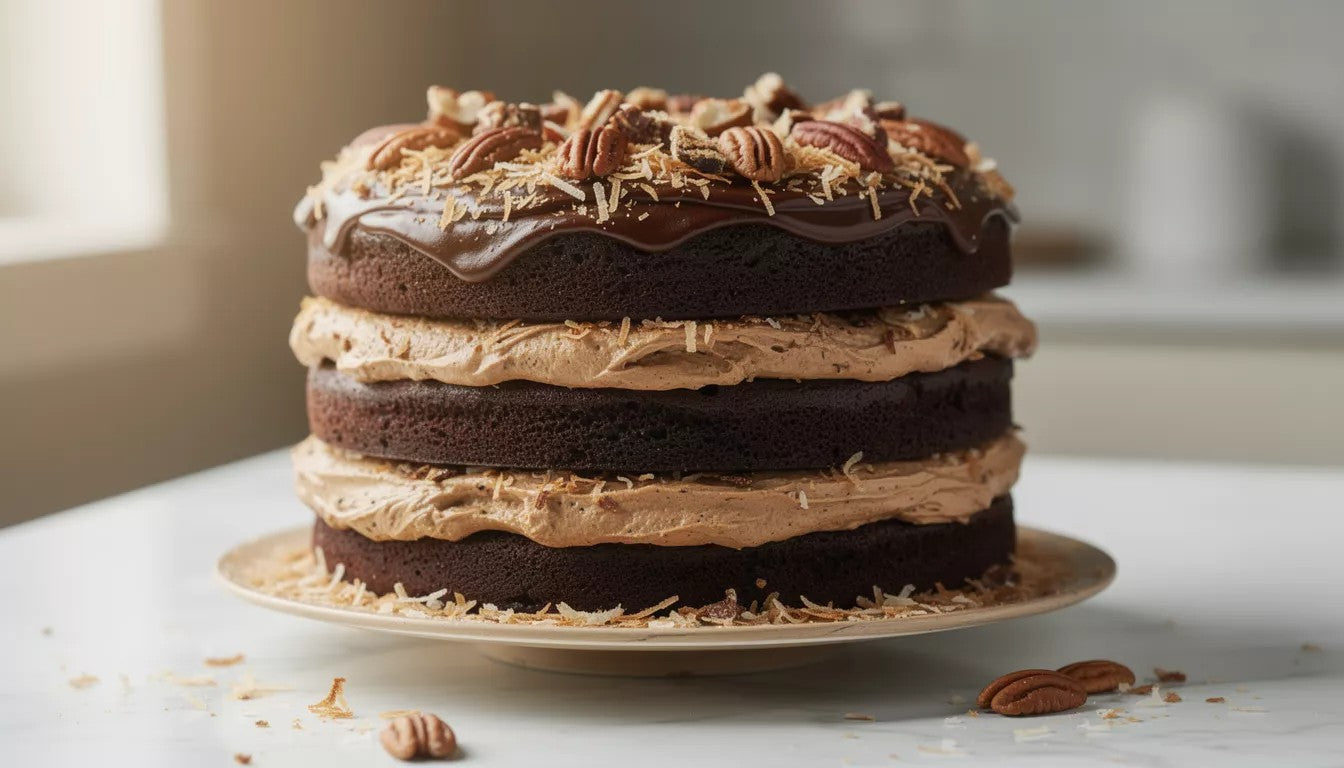
How to Make the Ultimate Vegan German Chocolate Cake: A Plant-Based Classic
Picture slicing into a towering chocolate cake with layers so moist they practically melt on your tongue, crowned with a luscious coconut pecan frosting that strikes the perfect balance between sweet and nutty. Now imagine creating this showstopping dessert entirely from plants. Welcome to the world of vegan German chocolate cake, where tradition meets compassion without sacrificing a single ounce of decadence.
Whether you're celebrating a special occasion, hosting a dinner party, or simply craving something extraordinary, this vegan German chocolate cake delivers restaurant-quality results right from your kitchen. The secret lies in understanding how plant-based ingredients can actually enhance the cake's moisture and richness while creating that signature coconut pecan topping everyone adores.
What Makes German Chocolate Cake Special?
Despite its name, German chocolate cake isn't from Germany at all. This beloved American dessert was named after Samuel German, who developed a type of dark baking chocolate for the Baker's Chocolate Company in 1852. The cake became famous in the 1950s when a Texas homemaker's recipe featuring this chocolate was published in a Dallas newspaper.
Traditional German chocolate cake stands out for three distinctive features: a moderately sweet chocolate cake base, multiple layers, and that unforgettable coconut pecan frosting. The frosting combines sweetened coconut, chopped pecans, and a rich caramel-like base that creates textural contrast against the tender cake layers.
Creating a vegan version means replacing eggs, butter, and evaporated milk with plant-based alternatives that maintain the cake's signature characteristics. The good news? Plant-based substitutions often create even more moisture than traditional recipes, resulting in a cake that stays fresh and tender for days.

Essential Ingredients for Vegan German Chocolate Cake
For the Chocolate Cake Layers
The foundation of exceptional vegan German chocolate cake starts with premium chocolate. Using high-quality vegan dark chocolate bars or organic cacao powder ensures rich, complex chocolate flavor without artificial additives. Here's what you'll need:
Dry Ingredients:
- 2 cups all-purpose flour (or gluten-free blend)
- 1¾ cups organic coconut sugar or cane sugar
- ¾ cup organic cacao powder (for deeper flavor than regular cocoa)
- 2 teaspoons baking soda
- 1 teaspoon baking powder
- 1 teaspoon sea salt
Wet Ingredients:
- 2 cups unsweetened plant milk (almond, oat, or soy work beautifully)
- ½ cup neutral oil (avocado, grapeseed, or melted coconut oil)
- 2 tablespoons apple cider vinegar
- 2 teaspoons vanilla extract
- 1 cup strong brewed coffee, cooled (enhances chocolate flavor dramatically)
The coffee trick deserves special mention. Just like in our Matilda cake recipe, adding coffee to chocolate cake amplifies the chocolate flavor exponentially without making the cake taste like coffee. It's the secret weapon professional bakers have used for decades.
For the Coconut Pecan Frosting
This is where vegan German chocolate cake truly shines. The traditional frosting uses evaporated milk, but plant-based versions create equally luscious results:
- 1½ cups full-fat coconut milk (or use coconut milk powder reconstituted)
- 1 cup organic coconut sugar or brown sugar
- ½ cup vegan butter
- 1 tablespoon cornstarch mixed with 2 tablespoons water
- 2 teaspoons vanilla extract
- 2 cups unsweetened shredded coconut
- 1½ cups pecans, chopped and lightly toasted
- Pinch of sea salt
The coconut milk provides richness while the vegan butter adds depth. Toasting the pecans beforehand intensifies their flavor and creates delightful crunch against the creamy frosting.
Step-by-Step Guide to Perfect Vegan German Chocolate Cake
Preparing the Cake Layers
Start by preheating your oven to 350°F (175°C). Prepare three 8-inch round cake pans by lining the bottoms with parchment paper and lightly greasing the sides. This ensures easy release after baking.
Create Your Vegan Buttermilk: Combine the plant milk with apple cider vinegar and set aside for 5 minutes. This creates a tangy "buttermilk" that reacts with baking soda for incredible rise and tender crumb. This technique also appears in our vegan flourless chocolate cake guide, proving its versatility.
Mix Dry Ingredients: Whisk together flour, sugar, cacao powder, baking soda, baking powder, and salt in a large bowl. Make sure to break up any cocoa lumps for smooth batter.
Combine Wet Ingredients: In a separate bowl, mix your prepared vegan buttermilk with oil and vanilla extract. The mixture should look slightly curdled—this is perfect.
Bring It Together: Pour wet ingredients into dry ingredients and gently fold until just combined. Don't overmix; some small lumps are fine. Finally, stir in the cooled coffee. The batter will be thin—this is exactly right for moist cake layers.
Divide batter evenly among prepared pans and bake for 25-30 minutes, or until a toothpick inserted in the center comes out with just a few moist crumbs. Avoid overbaking, as chocolate cake continues cooking as it cools.
Let cakes cool in pans for 10 minutes, then turn out onto wire racks to cool completely before frosting.

Making the Coconut Pecan Frosting
This frosting requires active attention but the results are absolutely worth it. In a medium saucepan over medium heat, combine coconut milk, sugar, and vegan butter. Stir constantly until the mixture comes to a gentle boil.
Reduce heat to medium-low and cook for 8-10 minutes, stirring frequently. The mixture should thicken slightly and turn a beautiful caramel color. Add your cornstarch slurry and cook for another 2-3 minutes until noticeably thicker.
Remove from heat and stir in vanilla, shredded coconut, toasted pecans, and a pinch of salt. Let the frosting cool to room temperature, stirring occasionally. It will thicken considerably as it cools, reaching the perfect spreadable consistency.
For the richest flavor, consider using premium vegan chocolate melted into the frosting base for extra chocolate notes that complement the coconut and pecans beautifully.
Assembling Your Vegan German Chocolate Cake
Place your first cake layer on a serving plate or cake stand. Spread about one-third of the cooled coconut pecan frosting evenly across the top, leaving about ½ inch from the edges (the frosting will spread when you add the next layer).
Add the second layer and repeat with another third of the frosting. Top with the final cake layer and spread the remaining frosting on top. Traditional German chocolate cake leaves the sides exposed, showing off the beautiful layers, but you can frost the sides if you prefer.
Let the assembled cake rest for at least 2 hours before slicing. This allows the frosting to set and the flavors to meld together. The cake actually tastes even better the next day after the layers have had time to marry with the frosting.

Expert Tips for the Best Vegan German Chocolate Cake
Use Room Temperature Ingredients: Bring plant milk, oil, and any refrigerated ingredients to room temperature before mixing. This ensures proper emulsification and a tender crumb.
Don't Skip the Coffee: Even if you're not a coffee drinker, include it. The coffee doesn't make the cake taste like coffee—it amplifies the chocolate flavor dramatically. The same principle applies to our vegan lava cake recipe.
Toast Your Pecans: Spread pecans on a baking sheet and toast at 350°F for 5-7 minutes until fragrant. This step intensifies their flavor and adds textural contrast to the frosting.
Cool Frosting Completely: If the frosting is too warm when you assemble the cake, it will slide off the layers. Be patient and let it cool to room temperature for the perfect consistency.
Level Your Layers: Use a serrated knife or cake leveler to remove any doming from the tops of your cake layers. This creates stable, professional-looking layers.
Storing and Serving Your Vegan German Chocolate Cake
Store your finished cake in an airtight container at room temperature for up to 3 days, or refrigerate for up to 5 days. If refrigerating, bring to room temperature before serving for the best flavor and texture.
This cake also freezes beautifully. Wrap individual slices in plastic wrap, then aluminum foil, and freeze for up to 3 months. Thaw overnight in the refrigerator before bringing to room temperature.
For the best flavor experience, serve at room temperature with a cup of hot coffee or a glass of cold plant milk. The combination of moist chocolate cake and chewy coconut pecan topping creates a symphony of textures and flavors that chocolate lovers dream about.
Customizing Your Vegan German Chocolate Cake
Make It Gluten-Free: Substitute the all-purpose flour with your favorite gluten-free baking blend in a 1:1 ratio. Make sure your blend contains xanthan gum or add ½ teaspoon if it doesn't.
Sugar-Free Version: Replace the coconut sugar with a sugar alternative like allulose or monk fruit sweetener. Check out our sugar-free chocolate cake recipe for more guidance on sugar substitutions.
Extra Chocolate Layer: Add melted vegan dark chocolate to the frosting for an even more decadent experience.
Hazelnut Twist: Replace pecans with toasted hazelnuts for a European-inspired variation.
Caramel Drizzle: Top the finished cake with vegan caramel sauce for added sweetness and visual appeal.
The Science Behind Vegan Baking Success
Understanding why vegan substitutions work helps you become a better baker. In traditional German chocolate cake, eggs provide structure, leavening, and moisture. In our vegan version, we achieve these functions through:
Structure: Flour proteins develop when mixed with liquid, creating the cake's framework. The cornstarch in the frosting provides similar thickening.
Leavening: Baking soda reacts with acidic ingredients (apple cider vinegar, coffee) to create carbon dioxide bubbles that make the cake rise.
Moisture: Plant milk, oil, and the coffee keep the cake tender and prevent drying. The high fat content in coconut milk creates richness in the frosting.
This same scientific approach makes our vegan chocolate recipes consistently successful and delicious.
Why Choose Vegan German Chocolate Cake?
Beyond ethical considerations, vegan German chocolate cake offers several practical advantages. Plant-based cakes often stay moist longer than traditional versions due to the oil and plant milk combination. They're naturally dairy-free, making them perfect for lactose-intolerant guests.
The environmental impact is significantly lower—producing plant-based ingredients requires less water and generates fewer greenhouse gas emissions than dairy production. By choosing organic, fair-trade ingredients like those in Coracao's chocolate products, you support sustainable farming practices and ethical labor conditions.
Most importantly, vegan German chocolate cake proves that plant-based desserts can be every bit as indulgent and satisfying as traditional versions. The combination of rich chocolate, sweet coconut, and crunchy pecans creates a dessert that everyone at your table will love, regardless of their dietary preferences.
Featured Snippet Summary
Vegan German chocolate cake is a plant-based version of the classic American dessert, featuring moist chocolate cake layers made with cacao powder, plant milk, and oil, topped with coconut pecan frosting made from coconut milk, shredded coconut, and toasted pecans. The cake stays moist for days, requires no eggs or dairy, and delivers the same rich chocolate and sweet coconut flavors as the traditional version.
Frequently Asked Questions About Vegan German Chocolate Cake
Can I make vegan German chocolate cake without coconut? Yes, though coconut is traditional. Replace shredded coconut with additional chopped pecans or walnuts, or use dairy-free chocolate chips for a different take on the frosting. The caramel-like base still provides delicious flavor.
What's the best plant milk for vegan German chocolate cake? Full-fat coconut milk works best for the frosting due to its richness. For the cake batter, any unsweetened plant milk works well—almond, oat, and soy all produce excellent results. Choose based on your preference and any allergies.
How far in advance can I make vegan German chocolate cake? You can bake the cake layers up to 2 days ahead; wrap tightly and store at room temperature. Make the frosting the day before and refrigerate, bringing to room temperature before assembling. The fully assembled cake tastes best after resting for at least 2 hours.
Why is my vegan chocolate cake dense instead of fluffy? Dense cake usually results from overmixing the batter, which develops too much gluten. Mix just until ingredients are combined. Also ensure your baking soda and powder are fresh—expired leavening agents won't provide proper rise.
Can I use regular cocoa powder instead of cacao powder? Absolutely! Regular unsweetened cocoa powder works perfectly in this recipe. Cacao powder offers slightly more antioxidants and a deeper flavor, but either option produces delicious results. Learn more about the differences in our cacao vs cocoa powder guide.
Create Your Perfect Vegan German Chocolate Cake Today
Now that you have all the secrets to creating an extraordinary vegan German chocolate cake, it's time to get baking. This recipe proves that plant-based desserts can be every bit as impressive, delicious, and satisfying as their traditional counterparts.
Whether you're celebrating a birthday, hosting a holiday gathering, or simply treating yourself to something special, this vegan German chocolate cake delivers on every level. The combination of rich chocolate layers and sweet coconut pecan topping creates a dessert that will have everyone asking for the recipe.
Ready to elevate your baking with premium organic ingredients? Explore Coracao Confections' complete collection of vegan chocolate and baking ingredients to create the highest-quality plant-based desserts. From fair-trade cacao to organic coconut sugar, every ingredient is chosen for both exceptional flavor and ethical sourcing.
Start your vegan German chocolate cake journey today and discover how plant-based baking can transform a classic American dessert into something truly extraordinary. Your taste buds—and the planet—will thank you.

Claire Bennett
I'm Claire, a chocolate lover and artisan based in a small town where I run a tiny home kitchen dedicated to exploring everything chocolate. From single-origin dark bars to creamy ganache and handmade truffles, I find joy in working with all types of chocolate. I believe chocolate has a story, and I love bringing that story to life through humble, heartfelt creations.

Leave a comment
This site is protected by hCaptcha and the hCaptcha Privacy Policy and Terms of Service apply.