


Gluten Free Chocolate Bars That Are Actually Worth Eating
By The Coracao Team · 5 min read · Updated September 2026
A celiac friend asked us for a chocolate recommendation. What she really wanted: chocolate she could trust. Not the kind with the small print that reads 'may contain traces of wheat.' Fair. Here's how we make gluten-free chocolate you can eat without checking the label twice.
Why most 'gluten free' chocolate isn't
Cacao is naturally gluten-free. Cocoa butter is gluten-free. Sugar is gluten-free. The gluten sneaks in through shared processing. Flour dust in the air of a facility that makes chocolate-covered pretzels, cross-contamination on the same equipment used for a cookie bar. Most large chocolate factories can't guarantee gluten-free, so they add a 'may contain traces' warning to cover the risk. Celiac response: skip it.
How our facility handles it
We don't share equipment with anything that contains gluten. No cookies, no pretzels, no cereal, no biscuits. None of it comes into our facility. So there's no shared-line risk. Every bar is dairy-free, gluten-free, soy-free, peanut-free, and refined-sugar-free by default. That's the whole line, not a subset.


What to look for on a gluten-free chocolate label
Three signals. One: 'certified gluten-free' or the GF certification stamp (the standard is <20 ppm). Two: no 'may contain traces' warning for gluten. Three: the ingredient list itself contains no oats (unless certified GF oats), barley, wheat, or malt. If a bar has any of those, it's out.
Best Coracao pick for someone with celiac
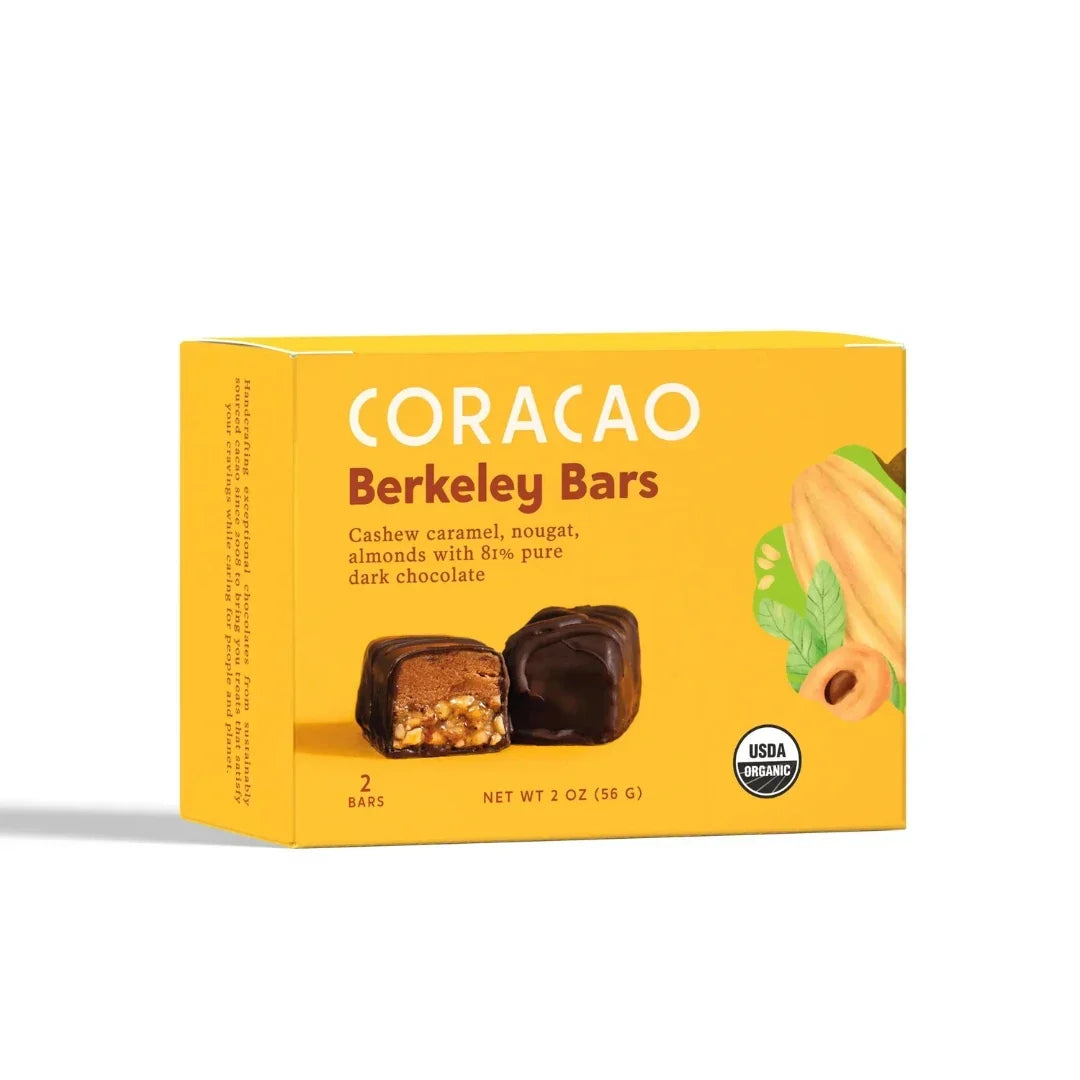
Any of them. The whole line qualifies. That said, the Berkeley Bar is our most popular first-try. Organic Criollo cacao, coconut sugar, vanilla, sea salt. Nothing to worry about.

The science of gluten cross-contamination
Cross-contamination is the thing that trips up most nominal gluten-free chocolate. Gluten proteins are hardy. They survive normal cleaning and can transfer via shared equipment, shared air handling, or shared bulk ingredients. Certified gluten-free means the finished product tests below 20 parts per million, the FDA threshold. That is low enough that most celiacs tolerate it without symptoms. Non-certified may or may not meet that threshold, and the may contain traces language is a legal shield that lets brands avoid testing. Rule of thumb, if the chocolate does not carry a gluten-free certification and does not have a facility statement, assume it is not celiac-safe.
How to read a chocolate label for hidden gluten
Gluten hides in chocolate in several sneaky ways. First, malt (barley malt, malt extract, malt flavoring), often used in mass-market chocolate for depth. All three contain gluten. Second, oats. Oats are naturally gluten-free but are often processed on shared equipment with wheat unless certified GF. Third, wafer cookies inside chocolate (KitKat-style), obvious but sometimes overlooked. Fourth, cookies and cream style bars. Fifth, some natural flavors. A short ingredient list of cacao, cocoa butter, sugar, and vanilla is your safest bet. If it has a paragraph of ingredients, read carefully.
Real celiac stories from our inbox
We get emails from customers with celiac disease every week. Two patterns come up. One, people who trusted a mainstream brand for years and finally got tested. Traces of gluten had been quietly costing them, they just did not know. Two, people who had been given a bland collection of gluten-free foods and thought that was their lot. Real chocolate made without shared equipment risk was a small emotional win they had stopped hoping for. We take both letters seriously. Our whole line is made in a facility that does not process wheat, barley, rye, or oats. No shared equipment, no shared bulk ingredients, no shared air.
How we compare to other allergen-safe chocolate brands
There are a handful of chocolate brands built around allergen safety. What makes us different is not just the exclusion list but the fact that we lead with flavor. Some allergen-safe chocolate tastes flat because the maker is optimizing for what is not in the bar. We optimize for cacao (Criollo, single-origin, cold-processed), and the allergen safety comes as a byproduct of our whole facility being built that way. The result is chocolate that a person without allergies would still choose. That is the bar we set for ourselves.
What the may contain warning actually means
The phrase may contain traces of wheat, barley, or oats on a chocolate label is a legal shield, not a physics statement. It means the brand has not tested to confirm gluten-free status, or the facility does process gluten-containing products on shared equipment. For a person with celiac disease, both are reasons to skip the product. The FDA gluten-free label requires below 20 parts per million, which is low enough that most celiacs tolerate it without symptoms. If a chocolate does not say gluten-free explicitly, and it says may contain, assume it contains. Do not take the gamble unless your specialist has cleared it.
Coracao's facility, and what it does not process
Our facility does not process wheat, barley, rye, or oats. It does not process dairy. It does not process soy. It does not process peanuts. It does process almonds, hazelnuts, and cashews (in specific bars, clearly labeled). It does process coconut. The equipment is dedicated to what we make and what we make is our whole line, so there is no shared production line risk between our chocolate and a gluten-containing product. If your specialist wants a facility statement for your care plan, email us and we will send it. This is what dedicated allergen-safe manufacturing looks like, and it is why our bar can be trusted.
Gluten-free chocolate that is not really for celiacs
One trap in the gluten-free chocolate market. A number of brands label their chocolate gluten-free because the recipe does not contain gluten ingredients, without the facility separation to back it up. Legally, they can do this. Practically, the risk of cross-contamination remains. If you are shopping for someone with celiac disease specifically, the label alone is not enough. You need to check the facility statement. If the brand does not proactively publish one, ask. If they cannot answer clearly, move on. Someone else in the market will meet the bar.
Frequently asked questions
Are all Coracao bars gluten-free?
Yes. Our entire line is gluten-free, made in a facility that doesn't process wheat, barley, rye, or oats.
Are you certified gluten-free?
Our facility standards meet the FDA gluten-free definition (<20 ppm). Ask us for specific certification documents if you need them for a celiac care plan.
Do you make gluten-free chocolate cookies or baked goods?
No, only chocolate bars, truffles, and drinking chocolate. All gluten-free.
Is Coracao safe for someone with celiac disease?
Yes, for our packaged products. No shared equipment with gluten ingredients. As always, check with your gastroenterologist for your personal risk tolerance.
Do your chocolate bars contain oats?
No. Some chocolate brands use oat milk in dairy-free bars; we don't.
Shop the Coracao line

Related from Coracao
- Dairy Free Chocolate That Tastes Real →
- Sugar Free Dark Chocolate Explained →
- Shop: Berkeley Bar →
- Shop: 81 Percent Heirloom Dark →
Every Coracao bar is gluten-free, dairy-free, soy-free, and peanut-free. Berkeley Bar is a good starting point. Free shipping over $59.

Claire Bennett
I'm Claire, a chocolate lover and artisan based in a small town where I run a tiny home kitchen dedicated to exploring everything chocolate. From single-origin dark bars to creamy ganache and handmade truffles, I find joy in working with all types of chocolate. I believe chocolate has a story, and I love bringing that story to life through humble, heartfelt creations.


Leave a comment
This site is protected by hCaptcha and the hCaptcha Privacy Policy and Terms of Service apply.