


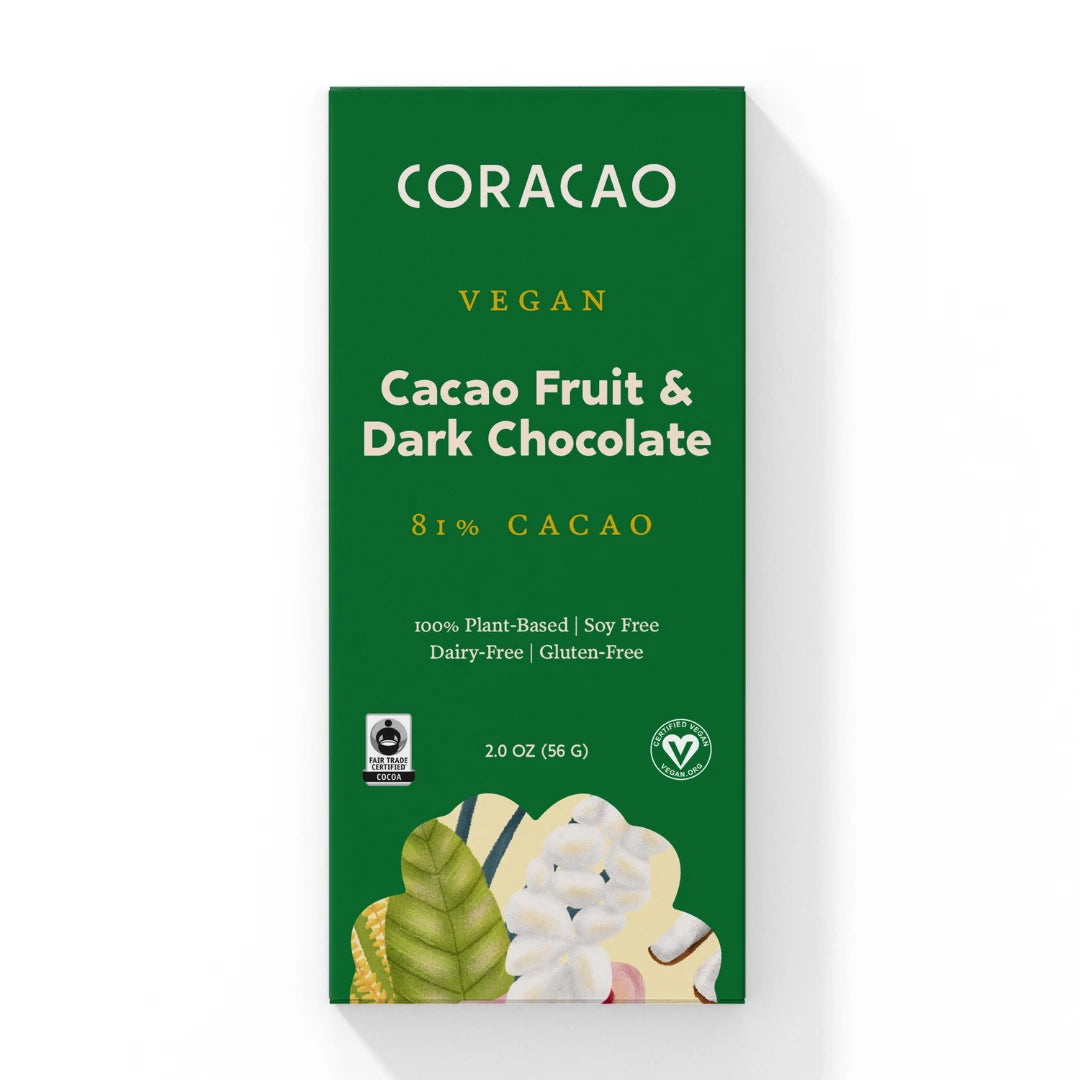
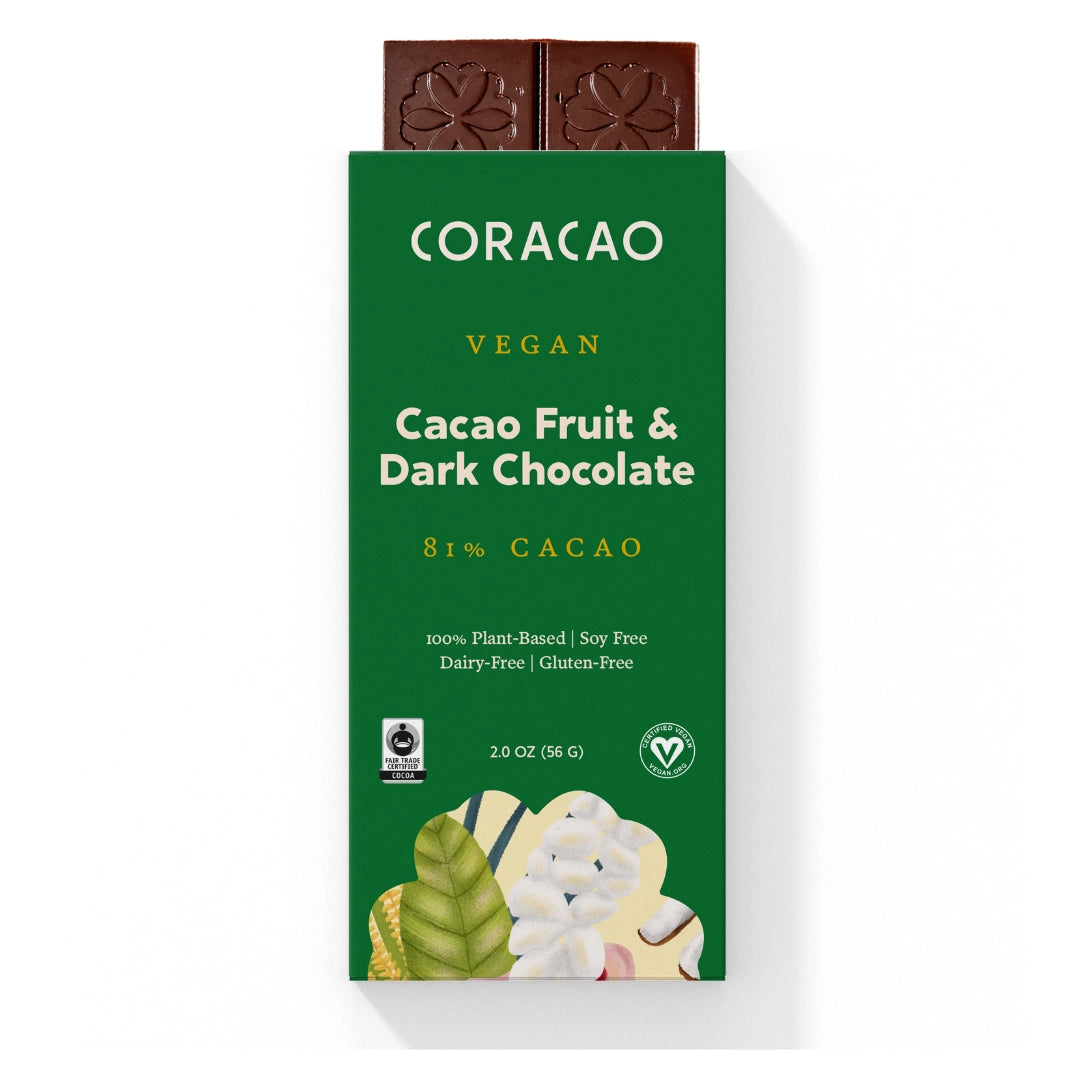
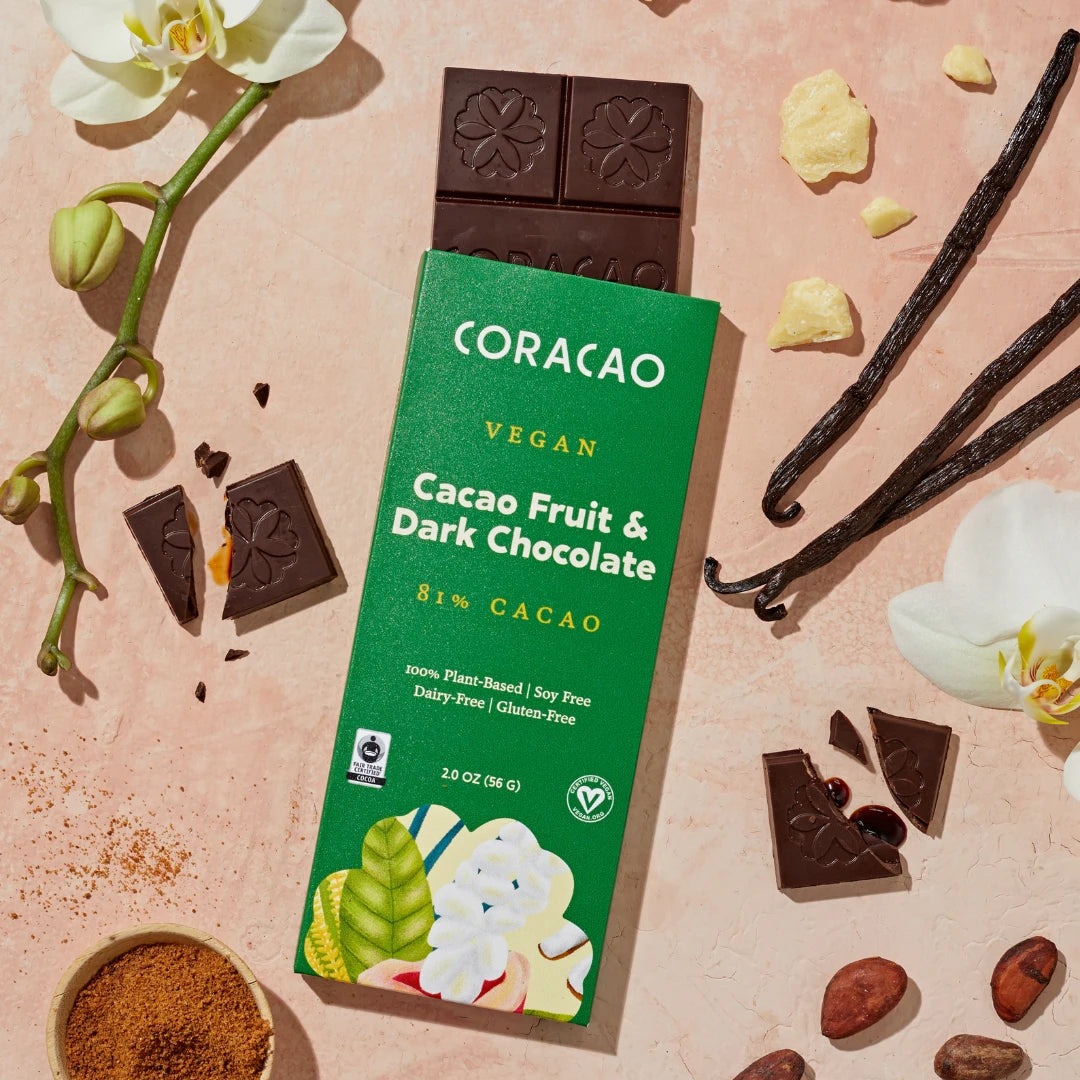
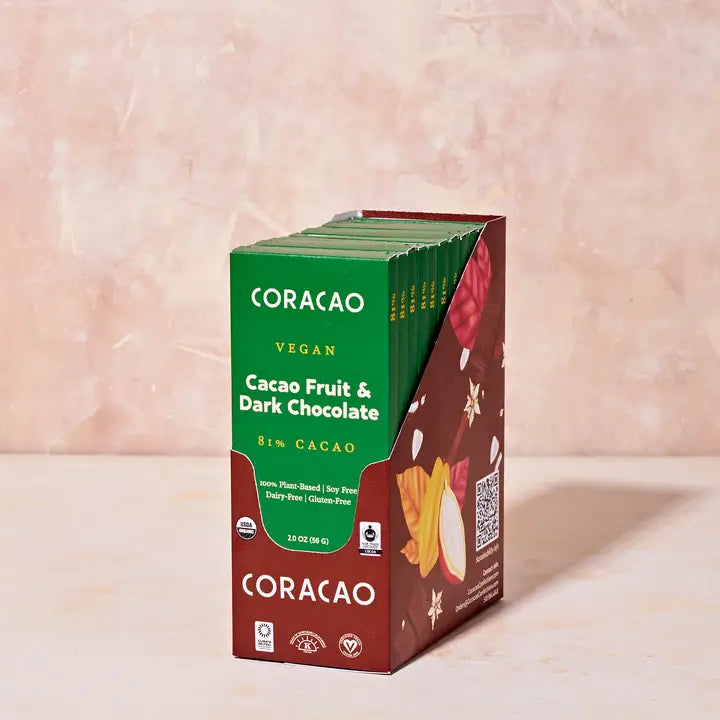
Cacao Fruit Chocolate Bar
Free Shipping on Orders $59+
Ingredients
Prop 65 Warning
⚠ WARNING: This product can expose you to chemicals including lead and cadmium, which is known to the State of California to cause cancer, birth defects or other reproductive harm.
More Information & product heavy metal testing results can be found here!
Cacao fruit chocolate, made from the whole cacao pod
Most chocolate is made from cacao beans only. The pulp and juice of the cacao fruit, which is naturally sweet and tropical, gets discarded at the farm. Coracao's Cacao Fruit Chocolate is different. We use both the bean and the cacao fruit juice as the sweetener, so the bar is sweetened almost entirely by the cacao plant itself.
What is cacao fruit, and why is whole-fruit chocolate worth trying
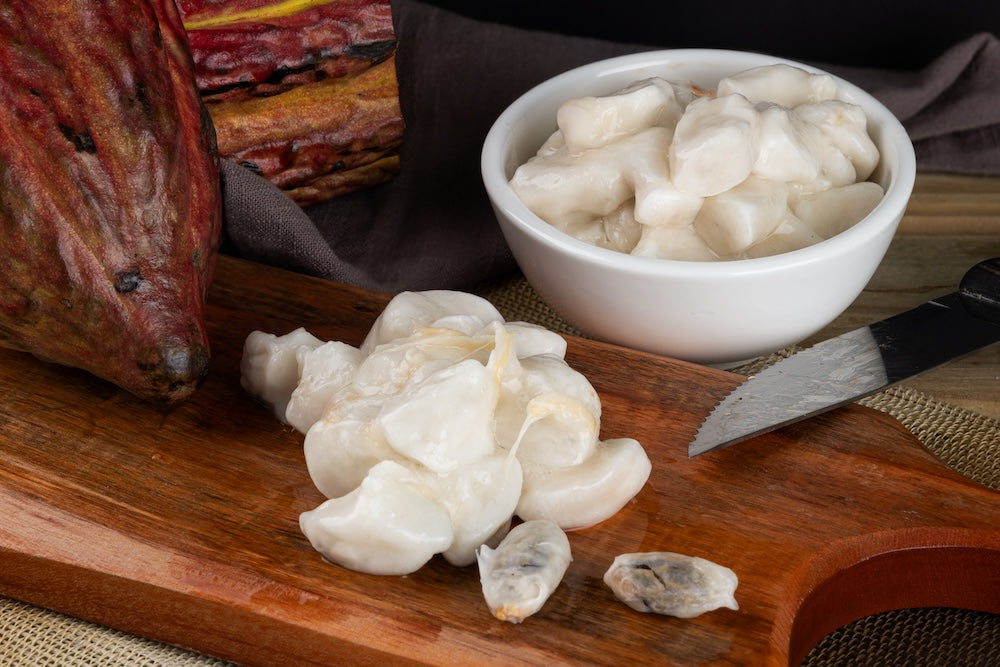
The cacao pod is a fruit. Inside, the seeds (which become chocolate) sit in a white, sweet, tropical pulp. The pulp tastes like a cross between lychee and mango. In traditional cacao production, the pulp is fermented off and discarded. We capture it as juice, concentrate it, and use it as the sweetener in this bar. The result is a chocolate that is sweet without added sugar in the traditional sense, has bright tropical fruit notes on top of the cacao base, and uses 100% of the cacao fruit instead of wasting half of it. If you've ever wondered what cacao actually tastes like at the source, this bar is the closest answer in chocolate form.
Ingredients and format
- Ingredients: Cacao*†, Coconut Sugar*, Cacao Butter*†, Cacao Fruit Juice Syrup, Vanilla Bean* & Himalayan Crystal Salt (*Organic, †Fair Trade Certified™)
- Sweetener: cacao fruit juice syrup + a small amount of coconut sugar; no refined sugar.
- Sizes: single bar ($7.50), 6-pack ($42.00), 12-pack ($81.00).
- Free from: dairy, gluten, soy, peanuts, refined sugar.
- Certifications: Fair-Trade, vegan.
How to taste cacao fruit chocolate
- Let a piece melt on the tongue for the full flavor arc, the tropical fruit notes come in after the initial cacao.
- Pair with cold-brew coffee or sparkling water to highlight the fruit-forward profile.
- Use in baking when you want a chocolate with bright, complex notes instead of one-note sweetness.
- Gift to anyone who has said "I don't really like sweet chocolate," this bar's sweetness is fruit-driven, not sugar-driven.
Cacao fruit chocolate FAQ
Is cacao a fruit?
Yes. Cacao is the seed of a tropical tree fruit (Theobroma cacao). The pod is a fruit. Inside the pod are cacao beans surrounded by white, sweet pulp. When people say "cacao" they usually mean the bean, but botanically the pod is fruit.
What does cacao fruit taste like?
The pulp around the cacao bean tastes tropical, somewhere between lychee, mango, and pineapple, with a bright, slightly tart edge. It does not taste like chocolate. Our bar combines that fruit-forward pulp with the chocolate flavor of the roasted bean.
Is cacao a fruit or a vegetable?
Fruit. Cacao grows from a flower on the Theobroma cacao tree and contains seeds inside a fleshy pod, which is the definition of a fruit.
How to eat cacao fruit at home?
Outside of producing regions, finding fresh cacao fruit pulp is nearly impossible. The pulp ferments and spoils within days. The most accessible way to taste the cacao fruit is in a bar like this one where the pulp has been juiced, concentrated, and stabilized into chocolate.
Where can I buy cacao fruit chocolate?
This page. Coracao's Cacao Fruit Chocolate is one of a small number of bars in the US that uses cacao fruit juice as a sweetener. We ship nationwide from Richmond, California.
Choose options
Experience the whole cacao
Nature's Perfect Pairing
Imagine biting into a chocolate bar that captures the entire magic of the cacao pod. Our 81% dark chocolate meets the vibrant, naturally sweet pulp that cradles cacao beans in their raw form. The result? A flavor journey that changes how you think about chocolate.
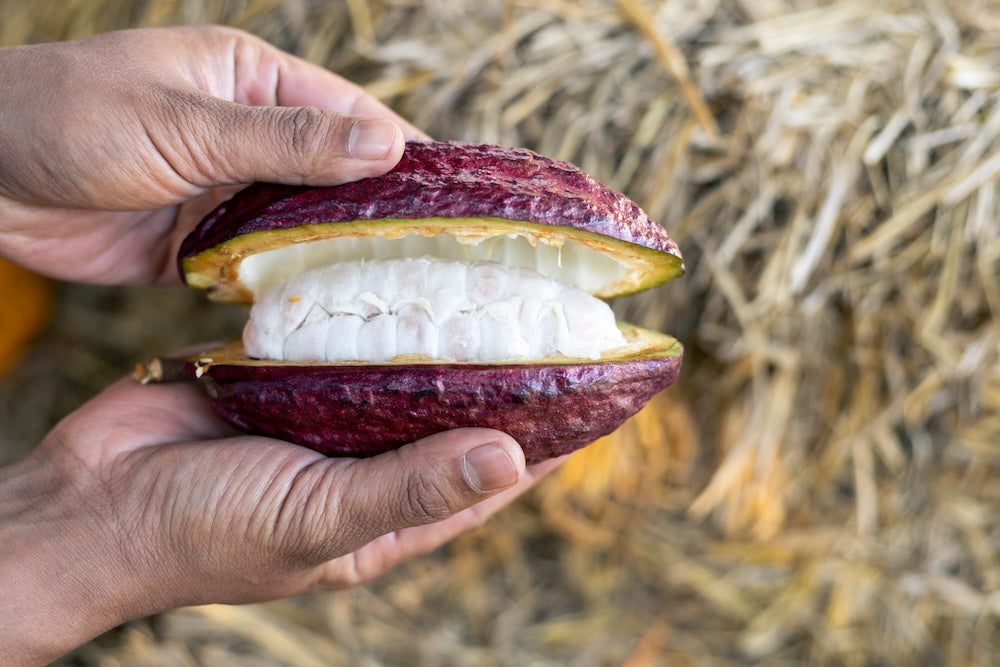
Less Waste, more taste
Historically, 70% of the cacao fruit was discarded during chocolate production. By incorporating cacao fruit pulp into our chocolate, we're:
- Reducing agricultural waste
- Creating new income streams for farmers
- Lowering the need for added sweeteners
- Supporting a more sustainable chocolate industry

All Cacao Used in Our Chocolate is Fair Trade Certified

100% Vegan & Plant-Based With No Exceptions

Lower Glycemic & Environmentally Friendly Coconut Sugar

All Ingredients Used in Our Treats Are Gluten-Free